Category Added in a WPeMatico Campaign

A Great Morocco Road Trip: My Favorite Itinerary and Car Rental Tips

Morocco Road Trip - Dades Valley
 

Let’s hit the road in this North African country and see what we can cover on a 2-3 week Morocco road trip. While you might be turned off by the idea of driving around Morocco, the combination of relatively good roads, a quiet countryside and friendly people make this an option for those who don’t mind getting behind the wheel of a reliable rental car.


A Guide to Renting a Car in Morocco

First up…should you book a car for your Moroccan road trip online or find one when you arrive? The answer in my opinion is to book online. In fact, it’s probably essential to reserve a car in advance in high season in order to ensure you get a decent car at a decent price.

The minimum age at which you can rent a car is 19, however, in many cases, drivers are required to have held their license for at least two years prior to renting. Additionally, as is common throughout the world, many rental companies charge a Young Driver Fee for drivers under a certain age (typically under 23). 

As for an International Driver’s Permit, it’s not required to either drive or rent in Morocco. 

In terms of cost, you can expect to rent a mini category car for as little s $130 USD for 2 weeks. However, I’d recommend a bigger, sturdier vehicle for such a trip as this will come in handy when away from the cities. You’ll be able to move at a faster pace while on the open road and you’ll be able to climb up the mountain roads with greater ease. It’s also more comfortable considering you’ll spend a decent amount of time inside the vehicle!

A larger economy or intermediate size vehicle should cost around $220 – $320 from a reputable rental agency, again, for a similar 2 week period.


Morocco Caar Rental


Insurance 

The most confusing part about renting a car anywhere in the world is the insurance. Renting in Morocco is no exception. To start, most rental companies include Theft Protection, Third-Party Liability and a Collision Damage Waiver with all of their rentals and to all customers. 

A Collision Damage Waiver (or Loss Damage Waiver) is a contract between you and the rental company that waives any charges for damage to the car’s body over the deductible or excess. However, since the deductible/excess for all rental companies in Morocco is at least $1,000, you need to have this amount available on your credit card. The rental company will put a hold on your credit card for the deductible amount for the duration of your rental. If this amount exceeds your credit limit, you’ll need to purchase extra insurance from the rental car company.

If you look at Discover Car Hire’s website, you can actually sort the results by the required deposit helping you find a car that requires the lowest hold on your credit card. They also offer Full Coverage for $9 per day, which is about half of what it would cost at the rental counter, making this coverage a good option for those who want to eliminate the deductible and risk altogether.

Many travelers, especially Americans, have credit cards that provide coverage for rental cars in Morocco. To use this coverage, you must decline the rental company’s Collision Damage Waiver. Note that credit cards usually do not provide third-party liability coverage, so you must make sure the rental company still includes that in your rental contract.

Note that when renting in Morocco, you can not take the car outside of Morocco. Due to political reasons, the border with Algeria is closed to all traffic. It may be possible to take your car to Western Sahara, though. Morocco considers this to be part of its sovereign territory and therefore treats travel to it as domestic travel. 

The Pick-Up and Drop-Off

There are many instances all over the world of rental companies attempting to charge customers for damage that the car already had. I had this happen to me after renting a car on the island of Ibiza. Even large, international rental companies can try this and it does happen in Morocco.

The best approach is to make note of every scratch or dent on the car on the damage report when picking up the car. Do not trust the rental company’s employees to mark everything properly. It is also a good idea to take pictures of the damage. This may help you avoid charges for damage you didn’t cause upon dropping the car off. 

After my Ibiza incident, I’ve started taking a video of the entire outside of the vehicle as extra protection as well. This way, if they try to claim damage, I have a very clear video to prove what was already on the car.

Now that the rental details are out of the way, let’s move on to my recommended itinerary…

Morocco Road Trip Itinerary

With a ton of destinations and routes, you could easily spend a couple of months exploring this country. But of course, most of us have a couple of weeks when we travel somewhere. So, using that time frame, I’ve put together what would be my personal favorite Morocco road trip itinerary based on my extensive travels here.

Let’s get going…

Casablanca

Okay. This has never been my favorite city on the planet but it’s definitely an ideal spot to begin your trip, being home to the largest and most well-connected airport in the country. Arrive, stay at the centrally-located Kenzi Basma Hotel or the more budget friendly Hotel Maamoura, visit the impressive Hassan II Mosque, eat at Restaurant Al-Mounia and then pick up your rental car on the morning you’re ready to head out of town.

Get on the A1 Highway heading north, make a stop in Rabat if you have time and then turn east onto the A2 towards…

Meknes

It’s a small imperial city and the relatively peaceful local market is worth exploring. The main Bab Mansour gate and the Bou Inania Madrasa should not be missed before spending the late afternoon at my favorite spot in the city, the super impressive Royal Stables, located about a 20 minute walk away from the market.

For a half day trip out of town, drive through the beautiful hills and around the village of Moudray Idriss until you reach the ancient and impressive Roman ruins of Volubilis. Hire a local guide from the ticket office and you’ll easily spend 2 hours here learning the history and admiring the landscapes.

*Chefchaouen

For many tourists, this picturesque pastel blue town in northern Morocco needs to be on the itinerary. I personally don’t think it’s worth it as it adds about 7 hours of extra driving time, there’s not much to do there and it is often jam-packed with big tour groups. You’ll get a few nice photos for sure but because a Morocco road trip already involves a decent amount of driving, I’d rather spend my time somewhere with less crowds and spend less time on the road.

So, from Meknes, it’s a short one hour drive east to…

Fes Morocco buildings

Fes

With its sprawling medina, endless lanes and abundance of gorgeous buildings to check out, Fes is well worth a couple of nights. Staying at a riad in the heart of the medina is the way to go so that you simply need to walk out the front door in order to find yourself among the colors, sounds, smells and action of this vibrant destination. While you’ll want to visit the Al-Attarine Madrasa, Bab Bou Jeloud gate, Funduq al-Najjariyyin (impressive wood carving museum) and the Chouara Tannery, leave sufficient time for aimless wandering as well.

The best gems of this city lie in the areas that don’t receive many visitors as most people pop in for a few hours, see a few sights and then take off. Don’t be afraid to speak with locals you come across or to duck into mosques, madrasas, markets and more that don’t have lines of tourists outside. This is what will lead to all kinds of invitations for local experiences that you wouldn’t be able to organize on your own.

Continuing this Morocco road trip, you’ll go south along the mountainous N13…

Merzouga

It’s a long day of driving up and over the High Atlas Mountains but you’ll have no shortage of opportunities to stop for a break. From the Swiss-like town of Ifrane to a spot in the forest that’s home to the Barbary Apes, from viewpoints over the absolutely gorgeous Ziz Valley to fossil workshops in the town of Erfoud (sounds touristy but is actually quite fascinating), the journey will pass quickly with so much to see along the way.

When you arrive in Merzouga in the late afternoon, settle into your guesthouse (I highly recommend Riad Madu) and watch the sun set over the dunes of the Sahara nearby. Then, enjoy a good night’s sleep before you begin a desert adventure the following day.

*Arrange to leave your car at the Riad the next day/night.

Now it’s time to head off into the Erg Chebbi dunes for your overnight Sahara Desert experience. Typically, you’ll leave town in the afternoon and you can travel by camel, jeep or foot (walking across the desert is my absolutely favorite option!) to reach your desert camp.

Most camps offer meals and activities to keep your evening busy before you head to sleep in your incredibly quiet surroundings. A Sahara desert experience is a must but definitely choose one of the reputable desert camps for your stay!

Morocco Road Trip - Sahara Desert

After a night out in the desert, you’ll return to Merzouga the next morning and you can either spend another night here (which gives you time to visit some local Gnawa villages) or you can head off towards the Dades Valley, about a 4 hour drive away.

Leaving Merzouga, you’ll take the N12 and N10 to reach…

Dades Valley

I’ll say it. This is my favorite region of Morocco. I could easily spend a week in this valley, staying at the beautiful Chez Pierre guesthouse, hiking through the Monkey Fingers gorge, taking a 4WD trip across the high desert, through the Valley of the Roses, into the remote towns of Agoulzi and Bou Tharar, walking through local Berber villages, interacting with all kinds of people, eating homemade food and simply enjoying this genuine area that few travelers visit. Take your time, spend a few days here and you will undoubtedly fall in love with this region too!

Coming out of the valley, you’ll head west on the N10 and continue to the N9 which will send you directly to…

Marrakech

Eventually, though, you’ll need to get going and the next drive will take you up and over the mountains one last time en route to Marrakech. On the way, you can stop in Ourzazate (famous for its film studios and casbahs), you can wander through Ait ben Haddou (UNESCO village where many films were made, such as Babel, The Mummy and Gladiator) and you should also stop at every viewpoint you can along the twisty, stunning mountain route.

Then, once in Marrakech, check in to your accommodation (again, I’d go with a local riad in the medina), head to the main square in the old quarter, Jemaa el-Fnaa, and cap off your day with great food and a lively atmosphere that begins as soon as the sun sets.

During your stay in Marrakech, I can highly recommend visiting the Marjorelle Gardens, the House of Photography Museum and the Bahia Palace. Then spend the rest of your time wandering the massive markets and old city (as you can see, Morocco is great for this!) and letting the experiences unfold.

Morocco Trip - Marrakech Market

From Marrakech, if you have time, you could also drive to the coastal town of Essouira, either as a day trip or for a couple of nights. Essouira offers a beach, citadel, art galleries, traditional craft workshops, the lively Moulay Hassan Square, great food and more.

And then, from either Essouira or Marrakech, the drive back to Casablanca is a direct one, where you can drop off your car and spend one last night before your Morocco road trip comes to and!

Morocco Road Trip – Final Thoughts

To complete all of the above, you would need 3 weeks if you want to have sufficient time in each destination. If you don’t visit Chefchaouen and possibly Meknes, you could do the circuit in two weeks and that’s what I’d recommend if that’s the time frame you’re working with.

Either way, Morocco needs to be seen. During the small-group tours I organize in Morocco, it’s quite common for participants to find themselves completely surprised at the sheer diversity of landscapes, sights, people and experiences that we come across. Part of this is because Morocco is the kind of country that makes getting off the beaten path very doable, and that leads to activities and interactions that go beyond what you may see online.

Even in the cities of Marrakech and Fes, two of the most visited places in the country, all it takes is a wander down random lanes or a quick conversation with a market vendor or peeking into a beautiful quiet doorway…and before you know it, you’re away from the crowds, having the kind of local, authentic travel experience that Morocco offers visitors around every corner.

Enjoy your trip and if you have any questions at all, just let me know!


If you have more time, consider extending your Morocco road trip to the remote and otherworldly Western Sahara.

The post A Great Morocco Road Trip: My Favorite Itinerary and Car Rental Tips appeared first on Wandering Earl.

Spanish Residency Card (TIE): All You Need to Know

Spanish Residency Card Paperwork

As mentioned before, the process to gather all of my documents and to apply for my Spanish non-lucrative visa was actually MUCH smoother and quicker than I anticipated. I got all my paperwork ready in one week and my visa was approved in only 10 days.

You can read my detailed instructions on how to apply for the Spanish non-lucrative visa here:
Non Lucrative Visa for Spain: How I Applied in Just 1 Week

However, once the non-lucrative visa has been issued, that’s only the first step. You must complete the next steps once you arrive in Spain in order to get your Spanish Residency Card (TIE).


The Next Step: TIE – Tarjeta de Identidad de Extranjero (Spanish Residency Card)

Once your visa is approved and you either pick up your visa at the Spanish consulate or receive your passport with visa in the mail (whichever option you chose), keep in mind that…

1. You have 3 months to enter Spain from the date your visa was issued

AND

2. Once in Spain, you need to apply for your TIE (Spanish Residency Card) within 30 days

The first part is easy. Just make sure you enter Spain within 3 months of your visa issue date!

The second part is more complicated. But now that I’ve completed the process, I’m going to share every detail on how to get your TIE once in Spain.


Step 1: Certificado de Empadronamiento

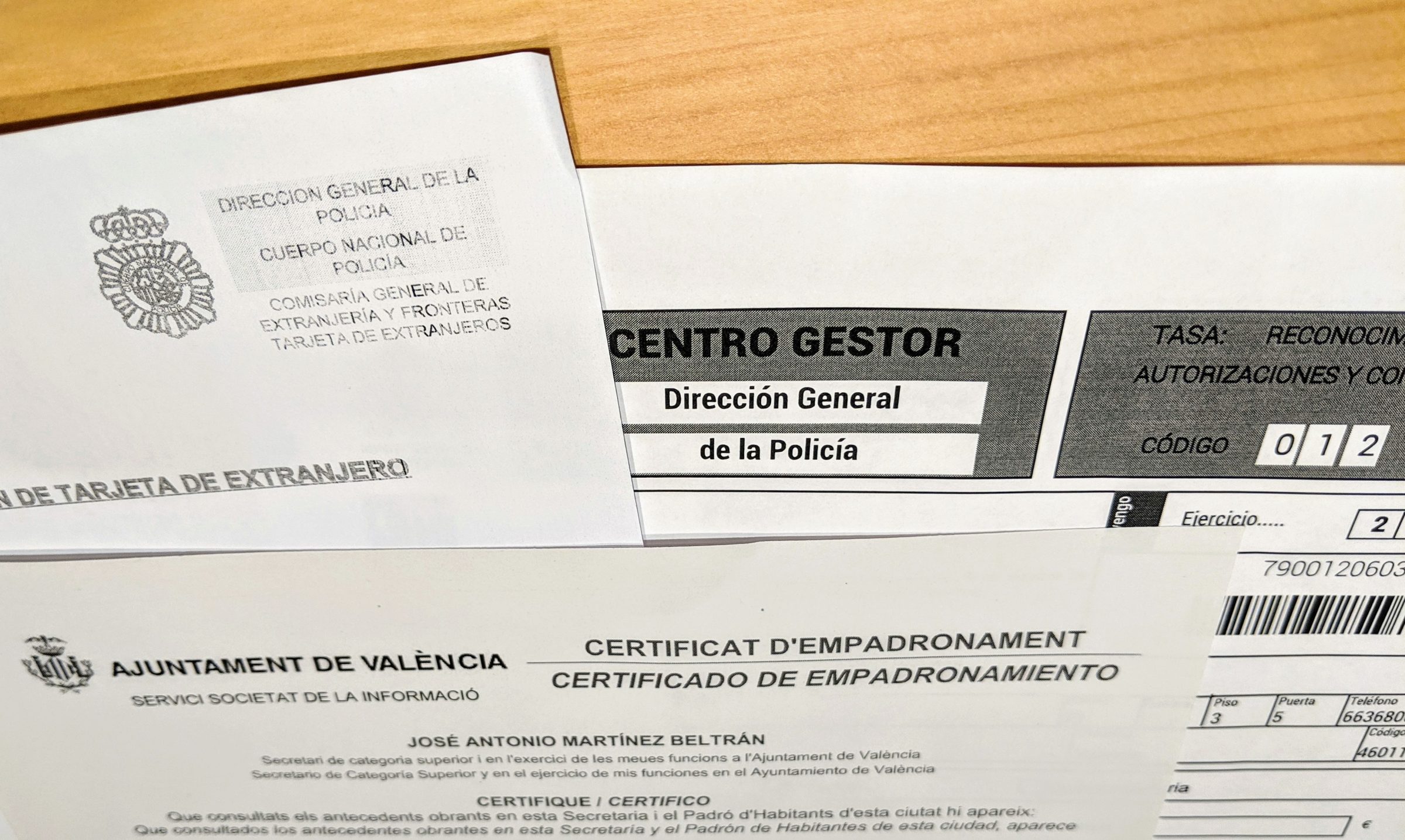
In order to get your TIE, you will most likely need to get this certificate from the City Hall first.

Not every city in Spain requires this document for a TIE but many do and here in Valencia, they definitely require it. This is basically an official certificate that shows you are registered as a resident of a particular city or town in Spain. The certificate is typically issued by the City Hall in the town or city where you plan to live in Spain.

With this official document, your life as a resident becomes much easier. Consider it official proof of residency and address, something that comes in handy when dealing with other government offices (such as the office that handles the Spanish Residency Card process).

How to Obtain a Certificado de Empadronamiento
  • Passport – Make 2 copies of the details page, your residency visa and your entry stamp into Spain or the Schengen zone. Bring the original passport and copies with you.
  • Proof of address – You’ll need a rental contract for a house or apartment that is valid for at least 6 months. Bring the original signed version and a photocopy. (If you are renting a room from someone or staying with family/friend, the owner of the residence might need to come with you to the appointment and they might need to bring a recent utility bill in their name. The rules vary depending on the city/town where you are living.)
  • Proof of rent payment – Bring a copy of the receipt you received when you paid your first month’s rent.
  • Make an appointment – Check the City Hall’s website and see if you need to make an appointment. Some cities require appointments (such as Valencia) and some cities allow you to simply show up at the City Hall. For Valencia, you can make an appointment here: Cita Previa. Simply choose “Padron” from the list and then fill out the rest of the form.
  • Go to the appointment – Show up at the City Hall for your appointment with all the documents above.

For me, once my number was called, the process took about 5 minutes. I gave the woman behind the desk my documents, she asked a couple of quick questions (my level of education, if it was my first time registering in Spain, why I needed the certificate, etc.) and then she printed out two copies of the official certificate right then and there.

That was it. I had the Certificado de Empadronamiento and I was ready to continue the TIE process.

*If you don’t speak any Spanish, you will probably want to have a Spanish-speaking friend or contact come with you.


Step 2: Make an Appointment for your TIE

You can do this before you get your Certificado de Empadronamiento. The only thing to keep in mind is:

  • In some cities, you don’t receive your Certificado de Empadronamiento while you wait.
  • You might have to return to the City Hall after a few business days to collect your certificate.
  • It takes time to gather the other documents you need for your TIE appointment.

Overall, if you allow for at least 2 weeks between your appointment for your Certificado de Empadronamiento and your appointment for your TIE card, you should be good.

Appointment Wait Times
Don’t be alarmed if there are no available TIE appointments for 4 or more weeks. It’s apparently common in some cities for there to be long waits for available appointments. But even though you technically need to apply for your Spanish residency card within 30 days of arriving in Spain, it seems that this rule is ignored. In reality, it has to be ignored since it’s common to wait over a month to get an appointment! So, if the available appointments are 1 or more months away, don’t worry, just book the earliest one you can.

Here’s how to book your TIE appointment:

  • Visit this government website
  • Choose your province from the drop down list
  • On the next page, choose “Policia – Toma de Huellas (Expedicion de tarjeta) Y Renovacion de Tarjeta de Larga Duracion
  • Click “Entrar” on the next page
  • Fill out the form with your NIE number (it’s on your visa), your name and country of nationality (Leave the “Fecha de Caducidad de su tarjeta actual” blank.)
  • On the next page, fill out your telephone number and email address and choose “Solicitar cita”
  • A drop down menu will appear with the office locations you can choose from (I only had one option but you might have more)
  • You’ll be taken to a page with a calendar
  • Choose a day/time that works for you and confirm your appointment

*Important: Be sure to save the confirmation that appears on your screen as you will absolutely need to take this confirmation paper to your appointment!

*Important: The available appointments change all the time. Keep checking. When I went on the site the first time, the earliest appointment was 4 weeks away. But then I checked one day later and suddenly appointments were available later that same week.

*Important: You need a separate appointment for each person if you are applying as a couple or family.


Step 3: Gather your Documents

Here is a list of everything you need for the TIE appointment:

  • Passport – Take the original and 2 photocopies of your passport details page, your visa and the entry stamp you received at immigration when entering Spain, or whichever country in the Schengen zone that you entered first.
  • 3 recent passport photos (headshots)
  • Appointment confirmation – Two copies of your appointment confirmation document that you saved after making the appointment.
  • Resolution letter – This Carta de Resolucion is a simple document that confirms that you did indeed apply for and receive your non-lucrative visa. Yes, even though you have the visa in your passport, you might still need this document. Luckily, it’s very easy to obtain. Visit this official website, fill out the form with your NIE number (it’s on your visa), the date you initially applied for your visa and your year of birth. Click “Consultar” and you’ll be taken to a screen with the details of your visa. Print out two copies of this confirmation.
  • Proof of address – Even though I had the Certificado de Empadronamiento, which proves I’m an official resident at the address I listed in Valencia, I still took my official apartment rental contract with me (original and photocopy) as extra insurance.
  • Application form – Fill out the TIE application form (Form Modelo EX17) and bring two copies with you. In the end, they didn’t ask for it but I’ve heard that some offices do want the application.
  • Form 790 – Codigo 012 – This is the form that helps you pay the fee for your TIE card. You need to fill out the form online, download it, print it out, sign it and then take it to a bank.
    When filling out Form 790-012:
    – Fill out the entire first section (Identificacion).
    – In the Autoliquidacion section, check the circle next to “TIE que documenta la primera concesión de la autorización de residencia temporal, de estancia o para trabajadores transfronterizos“. Do not do anything else in this section.
    – Under “Localidad”, enter the city in Spain where you are living.
    – Under “Ingreso”, choose “En efectivo” (paying in cash).
    – Download the completed form (all 3 pages) by clicking on the blue button at the bottom.

You’ll now need to print out the form, sign it and take it to the bank (in Spain) to pay the fee.

I was told you could go to any bank to do this but I had some difficulties. The first bank told me I could only get this done between 9:30am – 11:00am on Mondays and Thursdays, the second bank just said ‘no’ and the third bank told me to come back the next day. But then I found a tiny branch of Caixa Popular Bank and they helped me take care of it in 3 minutes. Just don’t save this part until the last second!

The current fee for the TIE is 15,74 Euros. You simply pay that amount, the banker stamps your form and you’re good to go.

Keep the stamped form as you’ll need it for your appointment.

*Get a Spanish phone number!: I use Google Fi and can use my US phone number all over the world. However, I did get a local Spanish SIM card from Vodafone so that I could list a Spanish phone number on my documents. This is important as they might not accept a foreign phone number on the forms and in the government registration system.

It’s easy though. It costs 10 EUR at Vodafone for the SIM (comes with 5 GB of data too). I never put the SIM in my phone but at least I can give out that Spanish number and I avoid confusion.


Step 4: Attend your Spanish Residency Card Appointment

Again, if you don’t speak any Spanish, this could be a challenge to do on your own as the staff at the Valencia office didn’t speak any English. I’ve heard the same about most TIE offices in the country. You might want to bring a local friend or contact to assist.

  • Arrive for your appointment 20-30 minutes early.
  • Wait. (In Valencia, the process was quite organized. You wait outside the building in a line that is arranged by appointment time. Once it’s your turn, they call you inside and you take a seat in the small waiting area. You’ll then be called to one of the desks within a few minutes.)
  • Hand over everything they ask for.
  • They’ll take your fingerprints.
  • You’ll receive a piece of paper confirming your residency.
  • They’ll tell you to come back in 1 month to pick up your Spanish Residency Card.

And that’s it.

Then, after 30 days, you can go back and pick up your Spanish Residency Card. You don’t need an appointment for this, just show up and get in the appropriate line.

Good luck and if you have any questions, just let me know!


The post Spanish Residency Card (TIE): All You Need to Know appeared first on Wandering Earl.

Storefront Travel Agencies Get Reimagined as Social Hubs

Tafari Travel

Brooklyn’s Tafari Travel invites customers to come in and enjoy a retro atmosphere. Tafari Travel

Skift Take: Travel agencies are thriving by replacing offices with lounges, complete with drinks and parties. By setting up shopfronts on busy streets, they’re also convincing travelers that they still exist.

— Linda Humphrey

Read the Complete Story On Skift

Travel Agency Social Hubs Invite Passersby to Join the Party

Departure Lounge

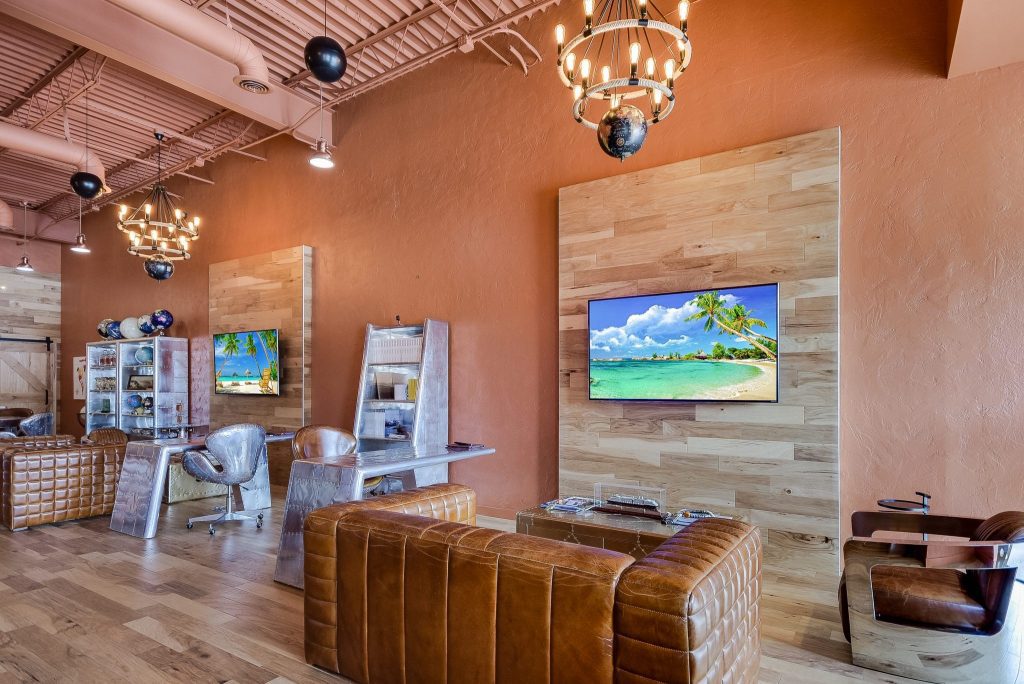
The Departure Lounge travel agency in Austin, Texas draws walk-in business with its inviting atmosphere. Departure Lounge

Skift Take: Storefront travel agencies may be fewer in number these days, but some are finding success by reinventing themselves as social hubs for their local communities. With imaginative decor and amenities, these agencies are drawing in customers who had previously been unaware of the value of using a travel advisor.

— Maria Lenhart

Read the Complete Story On Skift

The Often Overlooked Role Travel Advisors Play in the Path to Responsible Tourism

Davide Gabino  / Flickr.com

Travel advisors should steer their customers away from overtouristed destinations, such as this busy street in Venice, Italy, as shown in 2016. Davide Gabino / Flickr.com

Skift Take: While it’s more obvious that hotels, airlines, and cruise lines have a big impact on sustainable tourism, travel advisors wield influence too. How they guide clients in the choices they make has ramifications for the health of the travel industry, as well as for the planet.

— Maria Lenhart

Read the Complete Story On Skift

Can Travel Advisors Be a Secret Weapon in Quest for Sustainable Tourism?

Caccamo  / Flickr.com

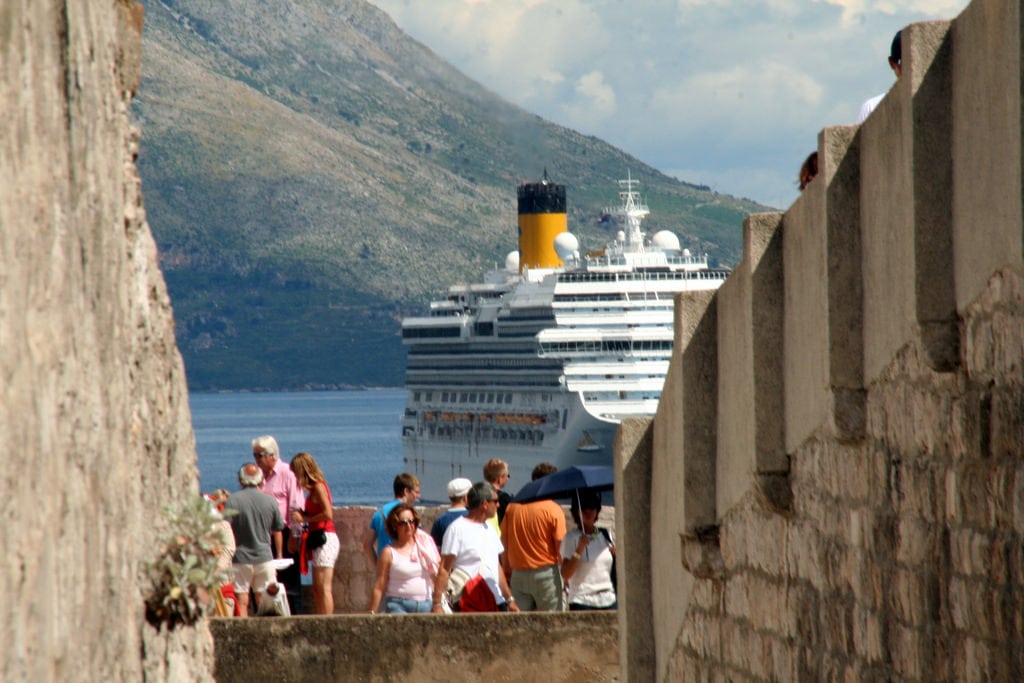
Tourists, with a cruise ship in the background, in Dubrovnik, Croatia, where locals are coping with overtourism issues. Travel advisors are on the frontline of steering consumers toward more responsible travel options. Caccamo / Flickr.com

Skift Take: By guiding clients toward responsible choices in how and where they travel, travel advisors can play a key part in promoting sustainable tourism. Not only do local communities benefit, but visitors come away with more meaningful experiences.

— Maria Lenhart

Read the Complete Story On Skift

IHG Direct Bookings Tech Play and 11 Other Top Hospitality Stories This Week

IHG

A guest room at the Intercontinental Hong Kong. IHG is implementing a new tech strategy to boost online revenue. IHG

Skift Take: This week in hospitality, IHG is taking a tougher approach with online agencies by using new technologies to gain traction for its mobile app and website. Meanwhile, more traditional hotel brands are introducing communal lodging for its guests.

— Jasmine Ganaishlal

Read the Complete Story On Skift

Host Travel Agencies Step Up to Train Wave of Newcomers

Travelport

Travelport’s Claire Osborne (left) with Meon Valley Travel’s Kelly Doherty making the first New Distribution Capability booking at the agency’s offices in Leicester, UK, in October 2018. Training is key for new travel agents, as well as veterans. Travelport

Skift Take: A surge of newcomers are setting up shop as travel advisors — with some of them unprepared for the realities of the job. Host agencies and consortiums are ramping up efforts to give them the education they need.

— Maria Lenhart

Read the Complete Story On Skift

Hyatt Joins Other Big Hotel Chains by Pledging to Eliminate Small Plastic Bottles

Hyatt Hotels

Hyatt Hotels plans to remove single-use plastic bottles with these larger containers in an effort to reduce waste. The larger containers are more easily recycled. Hyatt Hotels

Skift Take: Hyatt joins Marriott and IHG by promising to get rid of single-use plastic bottles of shampoo, conditioner, shower gel, and lotion with large-format bathroom amenities. Hotels are wisely promising to do what they can to mitigate waste. Let’s see if they can make their deadlines.

— Nancy Trejos

Read the Complete Story On Skift

Expedia Tells Hotels Adding Resort Fees Will Lower Your Listings on Its Pages

Expedia Group

Expedia Group’s Cyril Ranque spoke about the company’s new action against hotel resort fees at the Expedia Explore ’19 partner conference in Las Vegas November 14, 2019. Expedia Group

Skift Take: Expedia Group’s stance on resort fees could have been drafted by a United Nations diplomat. Expedia doesn’t want to alienate hotels and seeks to pick up market share based on Booking Holdings’ more forceful position. But it’s hitting resort-fee-charging hotels right where it hurts — in the prominence of their listings.

— Dennis Schaal

Read the Complete Story On Skift